KPV
Anti-inflammatory tripeptide derived from alpha-MSH. Targets gut inflammation and supports intestinal healing.
Compound
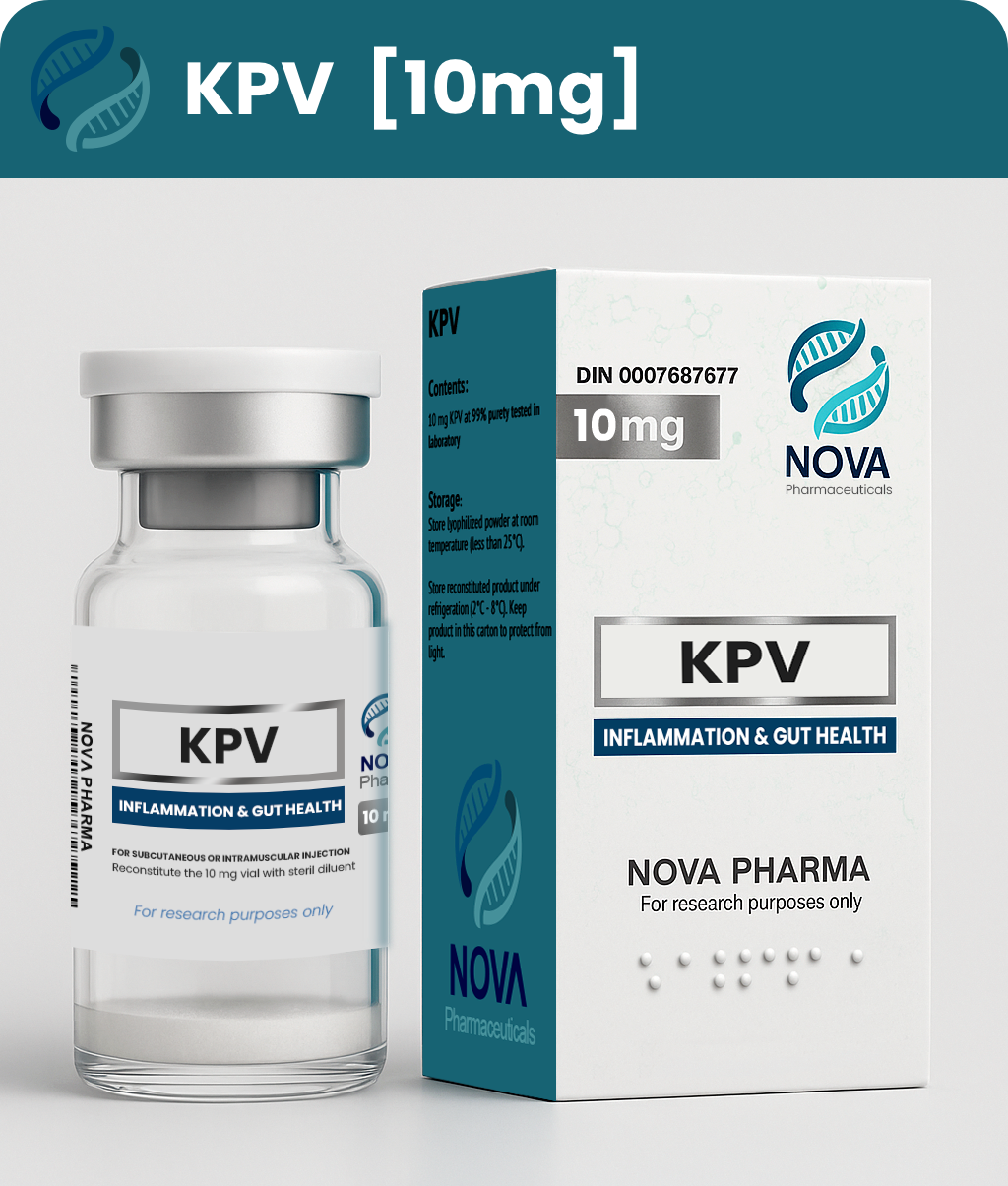
At a glance
At a glance
- Concentration
- 10mg
- Purity
- 99.5%+
- Route
- Subcutaneous injection
- Storage
- Lyophilized: room temperature, desiccated. Reconstituted: 2–8°C, ≤30 days.
KPV is a tripeptide fragment consisting of three amino acids — lysine, proline, and valine — derived from the C-terminal end of alpha-melanocyte-stimulating hormone (alpha-MSH). While alpha-MSH is known primarily for its role in melanogenesis and appetite regulation, KPV isolates its anti-inflammatory properties without activating melanocortin receptors responsible for tanning or sexual arousal effects. This targeted fragment approach makes KPV one of the most specific anti-inflammatory peptides available to researchers.
KPV exerts its anti-inflammatory effects through direct inhibition of the NF-kB signaling pathway, the master transcriptional regulator of inflammatory gene expression. By preventing NF-kB nuclear translocation, KPV suppresses the production of pro-inflammatory cytokines including TNF-alpha, IL-1beta, IL-6, and IL-8 at the transcriptional level. Research has also demonstrated that KPV enters cells via the peptide transporter PepT1, which is abundantly expressed on intestinal epithelial cells — a feature that gives KPV preferential access to gut mucosal tissue and explains its pronounced effects in intestinal inflammation models. Additionally, KPV inhibits the activation of the NLRP3 inflammasome, a key component of the innate immune response implicated in numerous chronic inflammatory conditions.
In the research literature, KPV has generated significant interest for its effects on gastrointestinal inflammation. Studies in colitis models demonstrate reduced mucosal damage scores, decreased inflammatory cell infiltration, and accelerated epithelial barrier restoration. Beyond gut applications, KPV has shown anti-inflammatory effects in dermatological models, including atopic dermatitis and wound healing contexts. Its small size (just three amino acids) gives it excellent tissue penetration and bioavailability characteristics.
KPV is best suited for researchers investigating intestinal inflammation, inflammatory bowel conditions, gut permeability, mucosal healing, and systemic inflammatory modulation. It is increasingly included in gut-focused research protocols alongside BPC-157, where the two compounds address gastrointestinal repair through complementary pathways.
Reconstitute the 10mg vial with 1-2ml bacteriostatic water. KPV can be administered via subcutaneous injection or, given its PepT1-mediated intestinal uptake, orally in capsule form for gut-targeted research — though injectable delivery ensures systemic bioavailability. Typical research dosing ranges from 200-500mcg per day. Store reconstituted solution at 2-8C and use within 28 days. Lyophilized powder should be refrigerated for optimal stability.
KPV is supplied as a lyophilized (freeze-dried) powder and must be reconstituted with bacteriostatic water (BAC water) before use in a research setting.
- Clean the BAC water vial stopper and the peptide vial stopper with an alcohol swab. Allow to dry.
- Draw the required volume of BAC water into a sterile syringe (typically 1–3 mL depending on target concentration).
- Angle the needle so the water runs down the inside wall of the peptide vial. Avoid dispensing directly onto the powder.
- Do not shake. Gently swirl or roll until fully dissolved. Vigorous shaking can denature peptides.
- Refrigerate reconstituted solution at 2–8°C. Most reconstituted peptides are stable 14–30 days depending on compound.
Target concentration determines drawing volume. For dosing math, consult the dosing math guide.
Independent lab verification
Research disclaimer
For research and laboratory use only. Not for human or veterinary consumption. Novo Pharma sells to qualified researchers of legal age and ships to Canadian addresses only. See disclaimer and terms.
Read the research
Reference articles from the lab covering this compound.
best of
Best Peptides for Gut Health 2026: IBS, Leaky Gut & IBD Research
Discover the best peptides for gut health in 2026. Research-backed protocols for IBS, leaky gut, IBD, and Crohn's using BPC-157 oral, KPV, LL-37, VIP, and Oxytocin.
best of
Best Peptides for Immune Function 2026: Thymulin, LL-37 & Beyond
Best peptides for immune function in 2026. Thymulin, Thymosin Alpha-1, LL-37, and KPV protocols for immune support, anti-viral defense, and immunosenescence.
compound guides
KPV Peptide: The Gut Health Game-Changer That's About to Go Viral
KPV peptide is a powerful anti-inflammatory gut health peptide derived from alpha-MSH. Learn about KPV for IBD, IBS, dosage, and how it compares to BPC-157.