Retatrutide 5mg
Triple-agonist GLP-1/GIP/GCGR peptide. Next-generation weight management compound with superior efficacy.
Compound
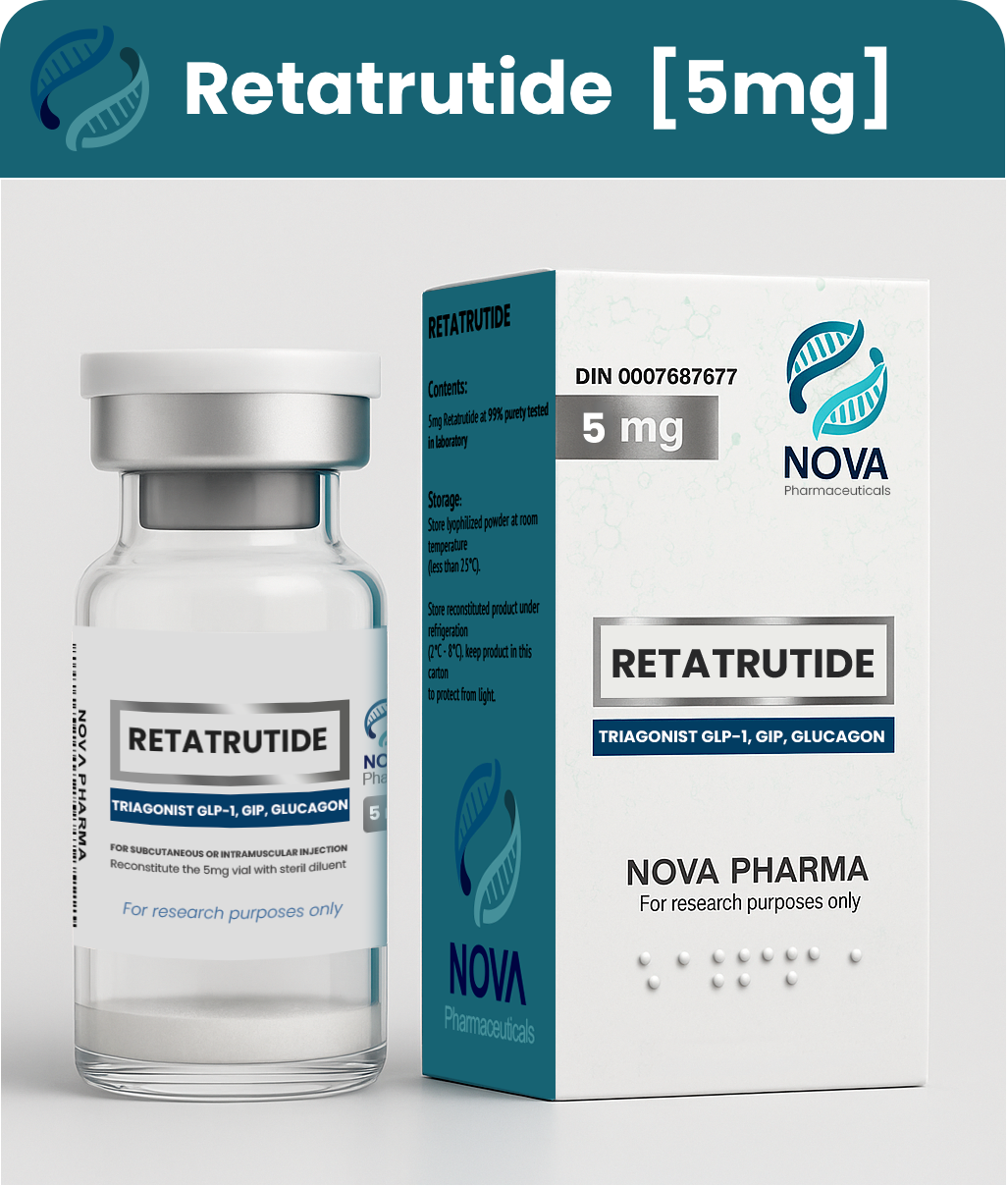
At a glance
At a glance
- Concentration
- 5mg
- Purity
- 99.5%+
- Route
- Subcutaneous injection
- Storage
- Lyophilized: room temperature, desiccated. Reconstituted: 2–8°C, ≤30 days.
Retatrutide is a synthetic peptide engineered as a triple agonist of the GLP-1, GIP, and glucagon (GCGR) receptors — making it the first triagonist compound to enter late-stage research. While tirzepatide activates two incretin pathways, retatrutide adds a third: direct glucagon receptor activation. The molecule consists of a modified peptide backbone with a C-20 fatty acid side chain enabling albumin binding and an extended half-life of approximately 6 days, supporting once-weekly dosing. Retatrutide represents the most mechanistically comprehensive metabolic peptide available to researchers.
The triple-agonist mechanism produces a metabolic response profile distinct from dual or single agonists. GLP-1 receptor activation reduces appetite and enhances insulin secretion. GIP receptor agonism improves adipose tissue metabolism and insulin sensitivity. The addition of glucagon receptor agonism introduces a potent energy expenditure component: glucagon stimulates hepatic glycogenolysis and gluconeogenesis, increases thermogenesis, promotes lipolysis, and raises resting energy expenditure. The net result is simultaneous reduction in caloric intake (GLP-1/GIP-mediated satiety) and increase in caloric output (glucagon-mediated thermogenesis and lipolysis) — a bidirectional metabolic lever that neither semaglutide nor tirzepatide fully engages.
Early research data for retatrutide have been remarkable. Phase II trial results demonstrated mean weight reductions of 24.2% at the highest dose over 48 weeks, with some participants exceeding 30% body weight reduction. These figures surpass both semaglutide and tirzepatide at comparable timepoints. Researchers have noted particularly robust reductions in hepatic fat content (up to 86% reduction from baseline in some cohorts), suggesting potent effects on non-alcoholic fatty liver disease. Improvements in glycemic control, lipid profiles, and blood pressure have been documented alongside the weight reduction effects.
Retatrutide is suited for researchers at the frontier of metabolic peptide science. It is the compound of choice for investigators studying triple-pathway metabolic optimization, researchers seeking maximal body composition change, and those interested in the emerging science of glucagon co-agonism. It represents the leading edge of the incretin-based weight management field.
Reconstitute the 5mg vial with 1-2ml bacteriostatic water. Administer via once-weekly subcutaneous injection. Research protocols typically start at 1mg weekly, escalating by 1-2mg every 4 weeks to a maximum of 12mg weekly. Dose escalation is essential — the glucagon component can transiently elevate blood glucose if the full dose is initiated without titration. Store reconstituted solution at 2-8C and use within 28 days. Due to the compound's complexity, lyophilized powder should be stored at -20C for long-term preservation and at 2-8C for near-term use.
Retatrutide 5mg is supplied as a lyophilized (freeze-dried) powder and must be reconstituted with bacteriostatic water (BAC water) before use in a research setting.
- Clean the BAC water vial stopper and the peptide vial stopper with an alcohol swab. Allow to dry.
- Draw the required volume of BAC water into a sterile syringe (typically 1–3 mL depending on target concentration).
- Angle the needle so the water runs down the inside wall of the peptide vial. Avoid dispensing directly onto the powder.
- Do not shake. Gently swirl or roll until fully dissolved. Vigorous shaking can denature peptides.
- Refrigerate reconstituted solution at 2–8°C. Most reconstituted peptides are stable 14–30 days depending on compound.
Target concentration determines drawing volume. For dosing math, consult the dosing math guide.
Independent lab verification
Research disclaimer
For research and laboratory use only. Not for human or veterinary consumption. Novo Pharma sells to qualified researchers of legal age and ships to Canadian addresses only. See disclaimer and terms.
Read the research
Reference articles from the lab covering this compound.
best of
Best Peptides for Fat Loss 2026: Complete Ranking (by Mechanism & Evidence)
Ranked guide to the best peptides for fat loss in 2026. Covers Semaglutide, Tirzepatide, Retatrutide, HGH Fragment, AOD-9604, CJC-1295, Ipamorelin, and MK-677 — with mechanisms, evidence levels, dosing, and cost per month.
comparisons
Retatrutide vs Tirzepatide vs Semaglutide: The 2026 Weight Loss Peptide Comparison
The definitive 2026 comparison of retatrutide (triple agonist), tirzepatide (dual agonist), and semaglutide (mono GLP-1). Mechanisms, efficacy, side effects, cost, and availability as research peptides.
compound guides
Retatrutide: The Triple-Agonist That Outperforms Semaglutide & Tirzepatide
Retatrutide (LY3437943) triple-agonist guide: 24.2% weight loss in trials, outperforming semaglutide & tirzepatide. Mechanism, dosing & FDA timeline.